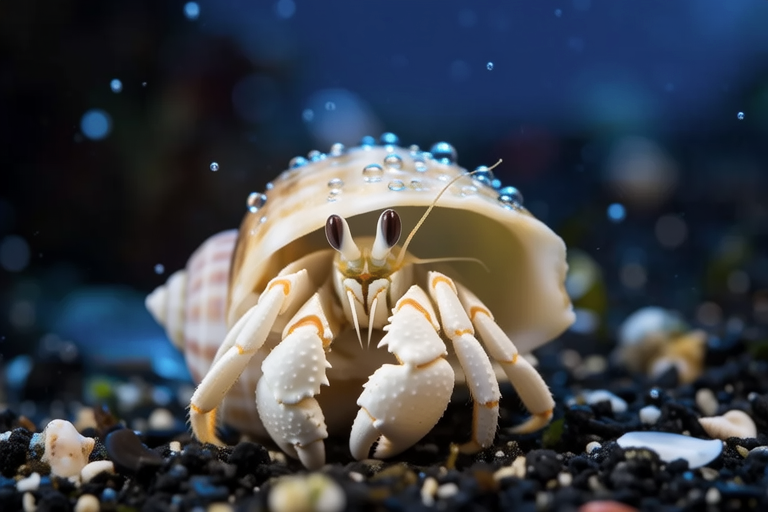
The Intricate Lives of Pea Crabs: Symbiosis Within Shellfish Hosts
Pea crabs, small crustaceans that live within the mantle cavities of bivalve mollusks, have long intrigued scientists and nature enthusiasts alike. These tiny creatures, named for their resemblance to garden peas, form one of the most fascinating examples of mutualistic symbiosis in marine environments. This article delves into the complex lives of pea crabs, exploring their unique adaptations, life cycles, and contributions to marine ecosystems.
Adaptations for Life Inside Bivalves
Pea crabs have evolved remarkable adaptations to thrive within the confined spaces of their hosts. Their bodies are flattened and elongated, allowing them to fit snugly between the shells of their bivalve hosts. The crabs’ exoskeletons are also soft and flexible, enabling them to avoid being crushed by the closing valves of their hosts. Additionally, pea crabs possess specialized appendages known as maxillipeds, which they use to filter food particles from the water entering the host’s mantle cavity. This adaptation ensures a steady supply of nutrients, reducing competition with their host for resources.
Life Cycle and Reproduction
The life cycle of pea crabs is tightly linked to their hosts. After hatching from eggs, larvae enter the water column where they drift until they find a suitable host. Once inside, they undergo several molts before reaching adulthood. Male and female pea crabs pair up within the host, and mating occurs within the safety of the mantle cavity. Females then carry fertilized eggs on their undersides, providing protection until the larvae hatch. This reproductive strategy ensures that offspring have a high chance of finding a host upon release.
Symbiotic Relationships
The relationship between pea crabs and their bivalve hosts is mutually beneficial. While pea crabs benefit from the protection and resources provided by their hosts, the hosts gain from the crabs’ presence as well. Pea crabs consume detritus and other organic matter that might otherwise accumulate in the mantle cavity, potentially causing harm to the host. Moreover, some studies suggest that the presence of pea crabs may enhance the reproductive success of their hosts by increasing the flow of water through the mantle cavity, facilitating better respiration and feeding.
Challenges and Ecological Significance
Despite their adaptations, pea crabs face numerous challenges in their environment. Predation from larger marine animals poses a constant threat, particularly when the crabs leave their protective hosts. Environmental changes, such as pollution or temperature shifts, can also impact the health of both pea crabs and their hosts, potentially disrupting the delicate balance of their symbiotic relationship. Furthermore, human activities, including overfishing and habitat destruction, can reduce the availability of suitable hosts for pea crabs, threatening their survival.
The ecological significance of pea crabs extends beyond their direct interactions with hosts. As part of the broader marine ecosystem, these crabs play a role in nutrient cycling and energy transfer. By consuming detritus and organic matter, they help break down and recycle nutrients, contributing to the overall health of marine environments. Additionally, the presence of pea crabs can influence the behavior and distribution of their hosts, indirectly affecting other species that interact with those hosts.
Scientific Insights and Engaging Narratives
Scientists continue to uncover new details about the lives of pea crabs through various research methods. For instance, genetic studies have revealed the diversity of pea crab species and their evolutionary history. Behavioral observations provide insights into the dynamics of their symbiotic relationships. These scientific discoveries offer a deeper understanding of pea crabs and their role in marine ecosystems.
Engaging narratives can bring the world of pea crabs to life, capturing the imagination of readers interested in marine biology and symbiosis. Imagine a story set in a bustling coral reef, where a young pea crab embarks on an adventurous journey to find a suitable host. Along the way, she encounters various challenges and meets new friends, all while learning about the importance of her role in maintaining the balance of her ecosystem. Such tales not only entertain but also educate, fostering a greater appreciation for the intricate web of life in our oceans.
Conclusion
Pea crabs exemplify the wonders of symbiosis and adaptation in marine environments. Through their unique adaptations, life cycles, and symbiotic relationships, these tiny creatures contribute significantly to the health and stability of marine ecosystems. Understanding the challenges they face and their ecological importance is crucial for conservation efforts and the preservation of marine biodiversity. As we continue to explore the mysteries of the ocean, the study of pea crabs offers valuable lessons about the interconnectedness of life and the delicate balance that sustains it.
